Venice: A Memoir
Ian RichardsReturn to No Frills NZ Literature home page.
On 22 August 1981, our train pulled in among the broad concrete platforms of Mestre. Venice's outer-suburban station. And I was surprised to find that I'd been here before--almost exactly a year ago. 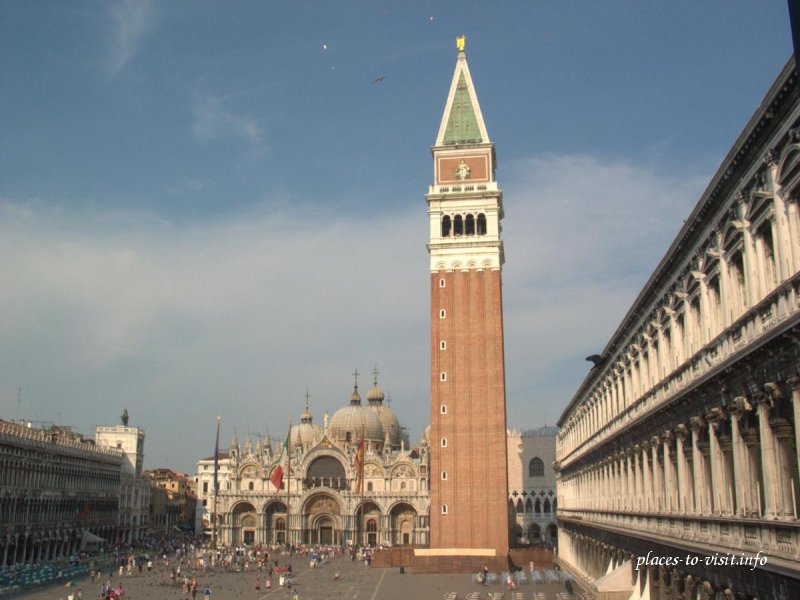 One year ago it was here that I'd stepped out from the precious carriage which had taken me reliably over half of Western Europe, and I'd stood on that strange platform, utterly lost. My first summer overseas. Waiting, hoping, for a train coming out of Venice for Greece. A twenty-one-year-old New Zealand student who'd just started his masters at London University--chance of a lifetime, onward and upward, per adua ad astra, go Kiwi!--utterly, hopelessly lost. Before classes even got underway, before I'd even made contacts in that vast new city, London, before I'd got beyond its margins, before I'd settled down and found useful things like the student cafeteria and the library and a clean loo, before I'd made any friends, before all that, I'd taken a trip to...somewhere I didn't know, Greece, and for reasons I would never admit. Because in truth I'd come to school early, with a couple of weeks before classes started, that was all. Because oh, you should go to Greece! said the old-timers to me who'd been at my hostel for twelve months or more, making it sound de rigueur. And that's why I did it: to keep them happy as much as anything, those students who'd finished their year abroad and would in fact be gone from the hostel when I came back--and in impressing them, I admit, to satisfy my self-image as the do-it-all, done-it-all hero of my own life's drama. To impress other people, then, but not to keep me happy--oh no. Because for most of the way to Greece, via Venice, I was just plain scared.
Travel propelled by narcissism. But back then, a year ago, I booked my cross-Channel ferry and the trains to Athens as if I was taking a trip home from Christchurch to Palmerston North for the weekend. Three days on a train!--I couldn't conceive of it, it meant nothing to me. Except to change at romantic Paris and Venice. Important, that. Those names sounded good, when I offered them and got looks of envy from other people. But I knew nothing about Greece, nothing about how to get there--you found an island, apparently, waiting for you. And in Venice station, I'd only have twenty minutes to find the other train...I didn't tell anyone that. So when I started, I was bewildered--terrified. Paris, Venice, Athens, all those exotic names! No one in New Zealand knew I was going, no one. What would happen? I went anyway. In Paris, I was taken around the famous sights for a hurried afternoon and evening, with my heavy pack bouncing about on my back as though I'd never be free of it, entranced at everything I was seeing and been shown, by a local, eager young homosexual. Norbert. Such a friendly man! he engaged me in conversation at the station, right there on the platform as I breathed in the Parisian air. Took me under his wing. The metro, the Arc de Triomphe, the Champs Elysees, the left bank and look! Shakespeare and Co, had I heard of it? We did Paris. Luckily, he was much too shy to make a serious pass and try to do me. We had coffee instead. I'd no idea what he was up to until much, much later, when others back in London told me similar stories. The amazingly friendly Norbert pushed me by the buttocks onto my trans-continental sleeper and waved a fond goodbye. Paris: such a pretty city to tour in exchange for a brief grope of my arse. I had the better of the deal.
I shared a berth with a middle-aged Italian man and his bespectacled little boy. We communicated in execrable German. My talent for academic languages at high school back in Palmerston North--French and German, Latin but no Italian, and no Greek, the sort of arty stuff you felt guilty for being good at, back there in New Zealand--it was all suddenly practical. I woke up in the morning near Switzerland's Lake Maggiore. Gazing on its bland, wet surface as if I was the only person on the train, the only one in Europe, only me in the whole wonderful world stretching all the way back to Palmerston North, ever, ever, ever! to have done this sort of thing. Everywhere I looked I could see...intrepid explorer-me! There was nowhere to eat in the carriages, nowhere to wash. I still had to manage the change of trains at Venice. But for a while I didn't care. We rattled across the Lombardy Plains, and I watched the gorgeous, buttery afternoon-light on the fields and understood, at last, why the Italians were such great painters. And so I fell in love with it all and started thinking: Yes, I've already arrived here; this is where I want to be; and no one else anywhere understands quite what I'm seeing. Oh, I couldn't wait to impress somebody. Fortunately, my German just wasn't good enough to start explaining my worthy insights to my Italian companions.
Then, also fortunately for me, the grave Italian man and his son began to be interested in the silent, skinny, dirty-haired youth who'd woken up in the carriage with them that morning. Who looked European, but wasn't. Who seemed intermittently so happy and so nervous. Who appeared intelligent, moderately, but was obviously too stupid to bring food or even some local currency with him from wherever-he-came--so that he'd eaten nothing all day and his stomach constantly rumbled. And this overgrown boy, he had to change trains in Venice; he'd even shown them the tickets. In twenty minutes, in that crowded station: him. Not a chance. So why not get off at Mestre? At what? At where? They laboriously explained that the train would make the suburban stop, then go on into Venice, and the new train for Trieste-Zagreb-Skopje-Athens (all those exotic names!) would come out and stop. At Mestre. Where I could just get on. They said that they, too, were getting out at Mestre. And the truth was, I was reaching the limits of my geographical knowledge. I'd no idea what was out there. Couldn't even put Trieste on a map. I'd simply trusted that the train would arrive, one day, just as the plane had arrived with me at Heathrow, in London. So I thanked them. And then I punished them for their good deed, when we alighted, by losing my nerve completely. Begging them to show me the correct platform. I had no idea how to read even the arrivals/departures board--oh, I didn't even understand where I was! who I was! nothing! They took pity on me. I stood where they left me. Exposed before strangers, before everyone, before what I'd become: lost utterly for an hour as I waited. Close to tears.
A year later now, with studies done, a Eurail pass, a lighter pack, a copy of Let's Go Europe and some lira--yes, the sort of cool, here-and-there veteran who understands train-arrivals and departures, I watched Mestre station go by. I was still too naive to know the expression 'grand tour'. But that was what I was trying to cram into my 4-week pass. I went, because that was what you did...same reason as before. You went to places like Venice and then bragged about it. There were thousands of us backpacking around; we kept bumping into each other again and again in youth hostels and at sightseeing spots. Amazed at meeting each other once more on our world travels, looking each other over and then talking up where we'd been. I'd met Trish and Lee outside the youth hostel in Munich. Do you speak English? they'd asked me hesitantly--what, did they think I looked German? I was secretly thrilled that they might. Because Trish was from New Zealand and Lee from Australia. And I was from...well, I just hoped that Palmerston North was a long time ago. Trish and Lee had already teamed up and, even though they were ordinary antipodeans like the former me, I joined them. Well, they were good company. We travelled together through southern Germany, Switzerland and Austria, and went on bumping into the same Americans, Norwegians, Brazilians and so on again, everywhere. Where had they been? The same places we had. And we were secretly grateful to find them, people just like us. With a Canadian guy we knew from Germany we spent a strange night out in the open in Zurich, sleeping in a public park because the youth hostel was full, relying on his company for protection.
At last, Trish parted from us one night at Vienna station, to return to London. And Lee and I headed out on the 11pm to Trieste, hoping to sleep on the train. Calling out confident goodbyes to Trish across the platforms. No returning for us! As always, Lee insisted that we go into first class, where she'd put her finger over the second-class sticker on her Eurail and smile whenever the guards came in for ticket checks. Lee had a thin, slightly beaky face, but large blue eyes and shoulder-length red ringlets, and she had a passably good figure and a tan. I wanted desperately to sleep with her. So far there'd been no chance even to try; youth hostels were divided into men's and women's quarters. But a well-placed thumb on a pass and sexy smiles had worked magic for her and for Trish on the railway guards in Germany...I envied those guards. No good with me along, though. With me present as a complication, the three of us had been turfed out--smiling maniacally--from first-class carriages all across Switzerland and Austria. And so by midnight on the way to Trieste we were being herded into an already overcrowded second-class section by a red-faced, myopic Italian guard. The train bumping too much and too hard to sleep easily, in second class. With--wake up, anyway, you!--more ticket checks, more passport controls, more red-faced, incorruptible guards. And we wanted to sleep, because we had to change trains very early in the morning at Udine. But after that, Lee led me by the nose back into first class, once more unto the breach--I was horny, I wanted so much to be able to brag that I'd...a would-be Don Juan, I was desperate to please her.
The compartment that we chose contained a small, stocky, neatly-dressed, crew-cut-and-squared-away young American, who greeted us and started an excited monologue as soon as we tumbled in. As if he'd been waiting for us. He was in the mil'tary. Stationed in Germ'ny. Working for mil'tary intell'gence. Well, that was hard to believe: he'd got a good-ole-boy accent a yard wide and seemed thick as a post. Lee and I exchanged superior glances. As he yabbered about having gone on leave and where he'd been, I thought lofty thoughts. Upper-class army-officers had been fatally out of touch with reality at Gallipoli. So, were these American troops in Europe any better?--these Yankee bumpkins, these products of erroneous union, these cerebral disaster-areas protecting us from the red menace across the hills. Then our protector told us that American planes had shot down two Soviet-built Libyan aircraft in a dogfight the day before--hadn't we heard? It was all over the news; I mean, where had we been? Because those F14s, boy, they really fly... He was off to report his whereabouts to an air-force base, just in case there was a war going to happen, and everything in his overeager manner suggested that he sincerely hoped one would. We nodded a lot, said we had to sleep. He was a bit scary. For the rest of the night I kipped on the compartment floor while Lee stretched out on the seats beside the American mil'tary man. When she began to doze, she told me later, he started fondling her leg...adrenaline, I don't know. Ready to make war and love. She fended him off, several times, she didn't know what to do and thought of waking me up if it got worse. But from the very little I'd learned about Lee...any feeling she had that she was out of her depth with men was a fantasy--as phoney a feeling as mine when I told myself that I really understood the world's dangers. Just as well she didn't try to wake me; sexual jealousy would probably have made me do something stupid, something out of character, something that could have got me hurt.
At Trieste, with the sun just up in the morning, we checked our packs in at the station's left-luggage area--we knew the drill--and were free to wander around the rawly wakening town. The peace was pleasant, though the wind was cold and we felt wrecked from lack of sleep. We ordered coffee in a cafe, used the toilet there. A squat toilet, of the type I remembered from Greece the year before, so I sighed and knew it was southern Europe again. The sort of place you should be grateful that your bum didn't touch the seat. Outside, we climbed to the top of some sort of steep-ish hill, principally because it was in our way, and looked out over the unlovely city, under a sky of heavy cloud. Then we wandered back down, into the back-streets of the old town. But in amongst it all once more--well, the neglected, piled-up, blue-and-red buildings were surprisingly beautiful. I admitted it, to myself. In southern Europe, I reflected, the dirt, the smell, the squalor, which in New Zealand would have been just that and no more, somehow contrived to transform itself into 'atmosphere'. Or maybe it was just me, responding to the essential distancing of the exotic. But I didn't think so--my imagination simply wasn't that good. At London University I'd specialised for my masters in James Joyce. That provincial Irish boy, that genius, that literary demigod whose vast imaginative power had taught me, above all, that I needed to face my own artistic inadequacies. But I wondered if he'd felt the same way when he arrived in Trieste. Having escaped dirty Dublin with vainglorious literary longings in his pocket and Nora to take care of. Both of them having dreamed of Paris but skidded by mistake to the far end of Europe, the unfashionable end. In the middle of the day, Lee and I bought some bread and sat to eat it on a windswept park-bench amid dust and litter. Still the only people about. Like a horror movie where everyone else has vanished. When we started eating, we were mobbed by pigeons. Yes, pigeons--pigeons, don't feed them, we told each other. Flying down, and coming on at us, more and more of them. Scrappy, chewed-looking, bandy, one-eyed grey things, marching on us, more and still more of them, collecting before us like a foraging army. Nothing like normal creatures, they wouldn't scare. We even tried to kick them away. Dropped the bread--take it, go on. We gave up and ran. Poor Jim, poor Nora...
Late in the day we arrived at the youth hostel, situated by the shoreline at Miramare Castle. Maybe it was a famous place: a castle, anyway. We sat about in the open air by the gates, enjoying the beautiful sights--the fortifications, the water and the long, tree-lined sweep of road we'd just trudged round--and waited for the hostel to open. Lee, who was always telling me how much she liked the sea, bought a peach and sat tearing off the skin by the shore. Wiping the juice from her hands on her blue cotton trousers. I watched her push the sunglasses up on her forehead; it emphasised the mannishness of her heavily hooked nose. The weather had finally lifted: hot, sunny, making her hair seem redder. My own nose was starting to redden again, another layer peeling under the one already peeling. Three Portuguese arrived, two young men and a woman--we began to chat. Have you been to Portugal? No? Ah! but you should. They told us the best beach to visit at the other end of Europe; we made notes. More good-humoured chat. And then, suddenly, Trieste was all right. Not just a pretty view of an old castle. The hostel opened, and we sat around the lounge with the Portuguese threesome into the evening. They read out snippets from the Italian newspapers--what they could manage--about Princess Diana. She'd married the month before and was following us across the edge of Europe, as she honeymooned on the royal yacht. The Portuguese asked us about her--we pretended to know more than what they'd just told us. But me, I'd not even seen the wedding. Staying just down the road from St. Paul's, I was, in London at the time when the wedding took place; but I was so sick of the fuss that, in the end, I'd ignored it. I only remembered rain every day for a fortnight beforehand and then, by magic, it came out fine for the day of the ceremony. That I told them. Ah! they said. We went off to bed early, slept like logs. Next morning, Saturday, Lee and I caught the 12.45 to Venice: an espresso-train that seemed to stop or falter every few minutes. Five of us in the carriage: Lee and I, a Yugoslav who'd been in Trieste for some shopping, and a Swedish guy with his beautiful Dutch girlfriend. I looked at the girlfriend's long, fine blonde hair and thought, God, how horny I was, surrounded by women like this all over Europe. The sun shone on some vineyards beyond the windows, with that buttery Italian light, and the corridor filled up with dirty backpackers who couldn't get a seat. And we stopped at Mestre--and then kept on going.
All I saw going into Venice station was my own damn pack; as the carriage got more and more crowded I had to hitch it up high on my lap. My pack. Given to me before I left New Zealand, because I'd got nothing to take with me, by a friend who'd used it for years tramping in the Tararua ranges. Made of tired orange canvas, gone a bit mouldy in places, with its rigid metal frame broken along one side and bound up with twine. It smelled like a tent, it made a damaged and eccentric rattling noise when I pulled it up over my shoulders. In the youth hostels round northern Europe some of the backpackers made fun of it. Arseholes, carrying brand-new, as yet untravelled packs. But then--then! my status among the other backpackers, the less naive backpackers, the experienced travellers there, it would shoot way up. Yes! among the ones who counted, who went around without fancy equipment, who'd watch as I endured this ribbing with the good-natured forbearance of...well...because I never explained to anyone at all why my pack was so old--because a real veteran wouldn't, would he. That was how you played the role. And so I pretended to be one of those people we seldom, in fact, saw much of on our tourist routes. People like Bert. A Kiwi I'd met a year ago when my train pulled into Athens and I heard a voice behind me in the money-changing queue say: 'Nao. Oim frum Timaru'. Bert: who'd been through South America, the U.S., Eastern Europe and was heading for Africa. Bert, who was taking a brief, well-earned break from tough travel--who'd been given the address of a good place in Athens and would I like to check it out with him? Who saved me from being lost and lonely and useless when he took me along to the Greek islands. Oh yes, that sort of status, status! it was important in our little community, bunched in around youth hostels and guide-book sights. I loved my unusual pack--my mate Bert knew a real pack when he saw it.
General chaos on the concrete platforms. We climbed down from the train and joined it all. Lee and I went in search of a bite at the large Tavola Calda in the station. We figured it out: buy a ticket, go to a counter, pick up the food. A couple of bread rolls later we found ourselves a table, and a waiter came over. What would we like to drink? Due cappuccinos, please. Venice--this is it, I mused, looking around the shop. The place is all tourists, it’s all dependent on tourists, but somehow with nothing organised for us...basically no organisation anywhere, not like northern Europe. A hole in the ground for a loo. The waiter returned and announced, in Italian, it was 1,800 lire for the coffees. Expensive drinks, but Lee handed over some money for the two of us. She took charge. She'd already told me she spoke a little of the language--well, her boyfriend back in Australia had Italian parents, she told me now, as her language skills failed us. In fact, she said, she had plans to go down to Naples and meet some of his friends, in a few days time. My heart plunged low onto the cool marble floor. What...what on earth would I do without her? And the waiter was still there. Demanding another 1,800 lire. From me. Snarling something, pointing towards a service-charge sign on the wall, in Italian and English. He wanted a tip. Eighteen-hundred lire. Oh, suddenly he'd organised something all right, the son of a bitch! Lee asked to see the bill. He put down his tray, pulled the paper out of his pocket. Eighteen-hundred lire. We'd paid it, we said.
And now he got angry. Not angry like us; we were just indignant, just a little pissed off. But he got theatrically angry. Shouting. Gesticulating up a storm. Everybody in the shop could hear that he was angry. People in the next street heard that he was angry. Yelling, waving, jumping angry; everybody in the whole goddamn city knew he was angry! At me. I owed him money. Who did I think I was? Eighteen-hundred fucking lire, baby! He had my number, he had my address! He had my wife and children in a cabin in the woods! Why, he'd tear off my tits with hot tongs and mash them up for fish food! For the price of two--just two more!--hideously expensive cups of crap coffee. Yes, I had to pay! I had to fold... He was an old pro at being angry. And maybe it was just that: because it was such a shameless rip-off. Or maybe I wanted to impress Lee. Or maybe it was displaced sexual disappointment--or some weird thing where I'd been pushed around too often in the school-playground long ago. But I got angry back. Sitting down. Looking up at him in his white shirt. Wondering if he was going to hit me or something, or call the cops and have them hit me. I bawled that I wouldn't pay. In English--he got the idea. He bellowed more: we ordered, we pay. I pointed at the coffees and waved extravagantly and bounced in my chair and screeched, all right take it away we don't want your bloody coffee take it away! take it away! we won't pay! ...and he stopped. Shocked. Then he produced a sort of hysterical snort, like a child who can't have a toy. No more theatre. He stamped his foot. He put his tray under his arm and stalked off among the tables, without the coffees. Ready to fillet the next person who ordered a drink. Lee and I drank our tepid cappuccinos, buzzing with excitement. Venice. Gosh.
We checked our packs in at the railway station--the drill, again--and started to walk in the direction of the Piazza San Marco. Hot, muggy, we headed into the shade of the back-streets. Bush-bashing (as I thought of it) our way to the Piazza--no more navigating by guide-book landmarks. The narrowing streets and whitewashed walls were nice, and the water in the small canals we crossed seemed cooling...so this was Venice. So picturesque. And so quiet! Staring up as we passed at the small, square, random windows in the pale-bleached walls, at the round-topped doors that opened straight onto the water, and at the filigreed balconies arranged at higgledy-piggledy intervals across the buildings, I had the strong impression it was the backs of the houses we were glancing into, at something carefree and intimate. We reached the bridge at the Rialto, over the Grand Canal. Once across, everything changed like magic. More of everything: more people, more shops, more tourists like us. Everywhere, more and more, until at the square it was a crush. Everyone milling about, packed in, looking. Tourists--and even more tourists--and vast numbers of pigeons fighting for space to land and crap, and then settling for both on our heads. And this Darwinian struggle, it was maybe the most interesting thing about the place. Because the square, the Piazza itself, looked tacky and neglected--tired in the hard light, the grime baked on by the sun. Except for the birdshit, we could've been in a museum. The vaguely oriental church-thing in front of us was falling to bits; the colours of the Doge's palace as we walked around it were all faded; the Bridge of Sighs when we took a butcher's round at the back was clogged up with queuing, camera-pointing versions of ourselves. 'The finest drawing-room in Europe': it was more like the snack-bar at the Odeon...and I couldn't imagine Byron hanging about on any sort of overcrossing here: that self-regarding, self-promoting, self-pitying drama-queen, my hero. We wandered on and wandered about, and it was all like that. People watching glass being made. People watching gondolas on the canals. People watching people trying to sell gee-gaws to anyone else. The river police charging up the canals to the latest trouble-spot. Lots and lots of pretty or not-so-pretty sightseers and, jostling among them, somewhere, the Italians.
Well, that was the tourist stuff: done. A small cafe for dinner; it looked reasonably Italian (to us), not too specially priced for visitors. No strong-arm tipping. We sat outside in the heat: pasta, goulash, assorted fruits. A conversation with an English couple at the next table, they'd once tried to emigrate to New Zealand. He'd been turned down, solemnly told that civil engineer was not a required profession. How could that be? He was bitter; it was the rejection--didn't our consulate advertise for British migrants? For once I understood--contradictory rules: New Zealand's rampant anglophilia and furtive xenophobia. A cock-tease scheme designed to let us feel loved without consequences. And oh dear oh dear I sympathised with him out loud, but said no more--I just reached hard for the red wine. Tipsy by night-time, and we strolled back towards the station. And now Venice was different. Rubbish and grime partly hidden in the startlingly suggestive shadows. Atmosphere acquired, while we weren't looking. The columns, the rows of windows, the balconies: they peeped out of darkness across the canals with new resources; the dimmed lights winked on the water; the courtyards, the calle were trailing off into enigmatic corners. And the San Marco! Floodlit! Effulgent!--I don't think I'd ever seen that sort of brilliant lighting done before--the bits of exotic, decayed buildings leering at us out of the night in their wild colours. Only a facade, but what a facade! I didn’t know if Lee was thinking the same; for the moment I ignored her as I took it all in. The wannabe-writer in me felt I should find something delicious to say about all this Venice. To pronounce on this heart of Venice, this what I'd come for--or would have, if I'd really planned my trip, and not just followed other people’s ideas of where to go. And other people, other writers, other famous appreciators of Venice, their famous ideas were here too. It was...it was...but I couldn't. I'd no experience to help me, I'd been culturally over-prepared for this but under-prepared by life--I'd often imagined, but never actually witnessed, a flirtatious old whore...one dressed in her threadbare stays and hidden behind her thickest make-up, giving that glad eye, that welcoming come-on, that you-know-you-want-it shimmy, to all and everyone who might pass by. It was something like that, I suppose. The other tourists were here still--as subdued by their surroundings as I was. They, too, knew there was sordid stuff beneath this allure--they'd seen it earlier in the day--and so we all shared in Venice's sexy decadence.
Back at the station. We got our packs, sorted out our gear, then laboriously checked the packs in at the left-luggage area again. No youth hostel in Venice, we'd been warned in advance--everyone in our little back-packing community had inside information. No hostel: we'd have to kip outside. So I'd got my sleeping-bag and, in preparation, Lee had already stolen a sheet and two blankets from the youth hostel in Trieste. We'd done this sort of stint before, that night in Zurich. The four of us
sleeping out of doors in that park, in a row on the grass with our packs as pillows. No chance then to play Casanova with Lee. And peculiar men shuffling about on the gravel paths deep into the night, lurking. The others with me all fell asleep immediately--but not I, I fought to stay awake, my new Swiss-army pocket-knife unclasped in my hand under the pack. Frightened...till I woke up. And now, here in Venice, my already-dwindling second-chance as Casanova with Lee vanished as we found a spot just to the left of the station's front steps...among a hundred other people also camped out with us in the warm, breezy night. The accommodating stars up in the strange northern sky. Someone playing a guitar. A party! Magic. I'd slept on a roof in Athens, on the beaches at Milos and Sifnos--on the rubbish dump at Platis Yialos one night when Bert and I were too drunk to notice our mistake in the dark--yes! places you could brag and brag about. But this, a makeshift encampment in front of a railway station, this was just fun. It wasn't, certainly, going to match the sex-drama of myself I'd written in advance in my head--but these guys, these travellers like us, wandering up and down all the improvised rows, exchanging trinkets and cigarettes and stories, casually singing to any snatch of song in the distance, they were undeniable fun. We listened with them, we chatted with them, we hung about. I slept soundly. At six, I was awakened by the noise of someone approaching: a policeman, part of a group of several policemen who were going round tapping everyone with their feet, quietly, firmly. Take the hint. One sleeper complained and refused to move and was hauled off, his hands pulled up behind his back. I felt a moment of craven gratitude: he wasn't me. But now, thinking further and at perfect liberty, I can imagine the police probably let him go just round the corner--a story for him to tell his friends.
Up and about, Lee and I boarded the river-bus for San Marco. But instead it went to the Lido--like Thomas Mann's tragic hero, we found this out only when halfway there on the frustratingly calm and open sea. So I thought of him, poor von Aschenbach, as we floated to where we hadn't intended to go, as I lived his drama and giggled: no small boys appearing to tantalise us, please. And on the boat a chatty Italian couple: a balding businessman in a smart cream-pale suit, the woman dressed in stylish pastel-purples, her hair swept up in a modish but motherly bun, and (yes!) their pretty little boy. The Lido, so wondafal, they said. Is most-see. Zey communicate with us is English--they were practicing, really working. And we, arrogant tourists, just thought them hard to understand. On arrival at the dock they bought us coffee and worked up the Lido, they built it for us in their Berlitz English. Without listening I marvelled at them: living in Venice, seeing it everyday and, instead, they want to know us. Inviting us to dinner the next night, but we knew we'd already be gone. Lee to meet her boyfriend's friends and I...I'd head maybe just a little more someways south with Lee. Besides, I was on a Eurail--and I'd done Venice. Just one month for all of Western Europe, the cradle of my sense of civilisation; it didn't pay to get too attached to any one place. Lee and I strolled down the hot beach: saying how nice the Italians were and oh! look at the cool blue sea. Lee, as in Trieste, was enthralled by hopes of a swim. She'd no mind for the merits of ancient culture. Instead, she despaired at the impossibility of pursuing any kind of water sport: no togs, no place to skinny dip, shit! Nothing to do but paddle, and she waded out a little into the lagoon that was older than both of our nations put together. I sat, too hot, too tired, too absorbed by her legs to join her, just burning my nose badly and suddenly bored--bored, bored! in fucking Venice! I watched Lee collect some little striped shells, piercing them, threading them onto her wire earrings and then dangling them cheerfully from her lobes. Making her own wild art and stuff. I actually envied her indifference to any more culture. Then I dragged us back to the river-bus, to the mainland, to the glorious Accademia. Pushed us in to have a go at the paintings. Art! Art! Art! Ah!--some of the worst lighting I'd seen in Europe, dingy, shadowy, and the place crammed with so much junk, so much B-grade stuff in amongst the good. Because I'd learned something: any European gallery had got enough to keep my art-pretensions occupied for more a natural lifetime...so just find me the good stuff. Gallop past the garbage, move it past the mediocre, a run-through quickie for me. Searching only for my things I knew from books, while my stiffening back-muscles still could manage all that looking up in awe. But my most wondafally anticipated, my most-see, my Giorgione's atmospheric 'The Tempest', ah! it was behind a thick slab of glass doing a fucking wonderful job of reflecting me trying to see through it.
Afterwards, the 3.06 to Florence. At the station early, we handled the confusion, dodged the crowds, got compartment-seats. Luxury. Lee and I sat with an Italian family. At Padua, people got on till the train was chock full--the corridors outside sweaty and noisy and jammed with everyone standing. But not us, seats for us. Then a second Italian family actually pushed their way into our compartment: father and mother in stiff best clothes, assorted garish kids and an elderly woman covered entirely in something massive, shapeless and black, like the skeleton of a beetle. The underprivileged dressed up and with somewhere to go--they were crowding up the compartment between the two rows of seats. Jabbering away in far too excited a fashion. Actually reaching above us, bold as you please, putting their luggage up onto our racks. And then they demanded our seats...our seats! What on earth was wrong with these odd and tawdry people? Poppa in his funny grey suit, so red-faced, so shamelessly officious, he rounded on me. These seats, he'd reserved them, he'd reserved this whole compartment. Get out of his carriage, get out of his train--this whole world was reserved; get out of his hemisphere, now, while the going was good. Yelling at me! Because I was tall, unshaven--I was foreign. Yes, I was the hard man you dealt with first; I was the one you had to shift. Or maybe—oh God, because I was just a boy, a soft target, the weak spot in the collective armour; I'd fold and the others would follow. Hell no, hell no...I shook my head. The other family with seats in the compartment, sitting nearby, they were backing me up. So now Poppa was threatening, he played all his cards at once, he'd fetch the conductor. Screeching in vibrato Italian, getting in close, talking hand to hand, he'd fetch the conductor! And wham!--while we hadn't noticed the dressed-up Momma had sat herself suddenly down among the family opposite, stretching the fabric of her elegantly cheap clothes, forcing out a space down onto the seat with her juggernaut bum. And the horrific old lady in black was coming up to sit between Lee and me. We gave way in fear, we strained to make room for her--all we could do just to stay, poised, on the edge of our seats. So I did my level best to fix Poppa with a stare and I spoke to him, and I'd learned how: use the diaphragm, get it all out loud. I bellowed, Ah! go on, go on, fetch him, fetch your conductor! And much to my surprise, he went.
Lee and I concentrated on the view: nonchalant cornfields and fascinating vineyards. The talk among all the Italians around us continued rising, explaining perhaps to each other (Lee said), there was no 'reserved' sign on the compartment-door. But somebody smiled, and then attention turned towards us. So, did we like Italy? Oh yes, bella. More smiles. And we were from...? They'd never heard of New Zealand, but Australia, yes--lots of emigrants there...I hid my disappointment. And Lee's boyfriend's parents were Italian-born--oh! They were thrilled, and Lee was the happy centre of everything and I...I was with Lee. The old woman in perpetual black beside us came from Catania, in Sicily. We were going there? We looked sad; everyone was delighted. We should go! We should go! When Poppa finally brought the conductor, it was all proceeding far too well for a fight. The compartment was reserved--well, Lee and I moved out to the corridor. The other family still sitting in the compartment would get off soon, they promised, and then we'd all of us squeeze back in together. But once Lee and I were outside, the door to the next compartment opened. Another family from Sicily--they'd heard us yelling; would we sit a little with them? So, do you like Italy? Yes, bella, etcetera. Soon there was space for us in both compartments. Soon we were eating everyone's snacks; they drank our mineral water; we ate even more of everyone's snacks; we regretted having nothing further we could offer but our thanks in return. And we were popular. More and more profusely popular--Italians from other compartments way off down the carriage began exchanging seats to spend just a few precious minutes in our company. We got off the train at Florence to pinches, to kisses, to hugs, to crying, to waves. Come eat our meals, come drink up our wine, come live in our houses and marry our children and give us babies, forever! forever! forever!
And I thought this is Italy, where life is grand opera. In northern Europe and back in New Zealand, people manage themselves best on a sense of a violent restraint; and Greece is a struggle to survive--or, sometimes, a brief lie in the sun until the struggle starts up again. But the Italians! Such expansive, such self-admiring, such frenzied and mutually sustaining drama! The Italians! How I suddenly loved it, the mad catharsis in it all...as I walked away across the busy, crazy station. Lee to head south, and now, after this at last, I'd really have to go north again. So I sighed out loud--but not a sigh for missed opportunities to play Don Juan. I was thinking with embarrassment of my self-parading return from Greece to my hostel in London a year ago, so full of my haphazard adventures, so sated, in truth, by my own relief at being safely back that I couldn't stop bragging. And at last a professor from New York, at lunch one day, he quoted the aunt from Tom Jones about me: 'I have seen the world.' And I, I was thrilled...at the time I never guessed he was being ironic--because there's only ever room for one on my grand, sweet stage, after all. So, walking away, I thought that no matter how beautiful this next town might be--and Florence, in fact, was by far the most downright beautiful city I've ever seen--as part of the drama of my Italian visit it would have settle for being in the second act.
Copyright Ian Richards, 2008
Return to No Frills NZ Literature home page.